You’re managing performance across thousands of employees, multiple regions, and complex org structures. Your current system probably isn’t cutting it — whether that’s clunky legacy software, disconnected point solutions, or spreadsheets that somehow still haven’t died.
The right performance management platform does more than digitize reviews. It connects individual contributions to business outcomes, surfaces talent risks before they become problems, and gives your managers the tools they actually need to develop their teams. At an enterprise scale, that’s the difference between a performance culture and performance theater.
We’ve evaluated the leading platforms based on what matters for large enterprises: scalability, integration depth, analytics capabilities, and whether your people will actually use them. Here are the 10 systems worth your consideration.
Key Features to Look for in Performance Management Software for Large Enterprises
At enterprise scale, performance management software must support decisions, not just processes. The difference between a useful system and an expensive one comes down to a few non-negotiable capabilities.
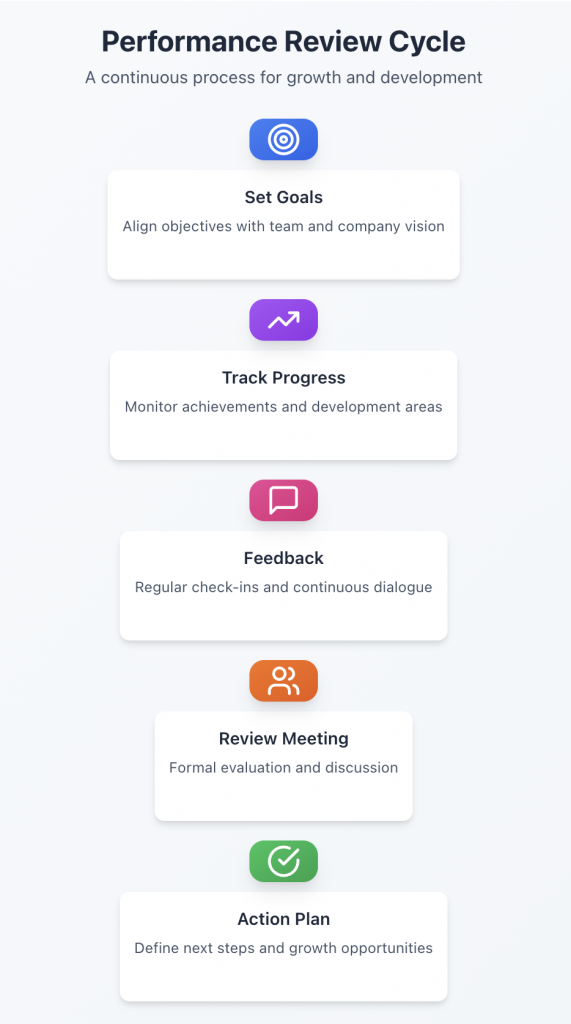
1. Enterprise-Grade Scalability and Governance
Your system must handle thousands of employees, multiple geographies, and layered org structures without breaking workflows. That includes role-based access, audit trails, and consistent execution across business units.
2. Clear Link Between Performance and Outcomes
Performance data that doesn’t influence promotions, compensation, or succession planning is operational noise. Leading platforms connect performance signals directly to business outcomes — making decisions explainable and defensible.
3. Manager Consistency and Calibration
At scale, inconsistency is the biggest risk. Strong platforms enable structured calibration, reduce manager bias, and ensure performance standards don’t change team by team or region by region.
4. Executive-Level Analytics and Visibility
CXOs don’t need more dashboards. They need answers. The right software surfaces talent risk, performance gaps, and decision trends — without manual analysis or lagging reports.
5. AI-Driven Decision Support
Modern enterprise platforms use AI to flag anomalies, highlight bias, and guide performance and compensation decisions. This isn’t about automation — it’s about improving decision quality at scale.
6. Deep Integrations with Core Systems
Performance management cannot live in isolation. Seamless integration with HRIS, payroll, finance, and workforce planning systems is critical for accuracy and adoption.
7. Adoption at Scale
If managers don’t use the system consistently, nothing else matters. Enterprise-ready tools are intuitive, embedded into workflows, and designed for real-world usage — not ideal scenarios.
Top Performance Management Software for Large Enterprises
Once performance management reaches enterprise scale, the question is no longer which tool has the most features. It’s which system helps leaders make better, faster, and fairer decisions across thousands of employees.
Many platforms digitize reviews. Some enable feedback. Very few connect performance insights to real business outcomes like compensation, promotions, and retention. That distinction is what separates operational tools from executive systems.
Below, we break down the performance management platforms that matter for large enterprises — starting with the one purpose-built for decision intelligence.
Stello AI — Enterprise Performance & Compensation Intelligence
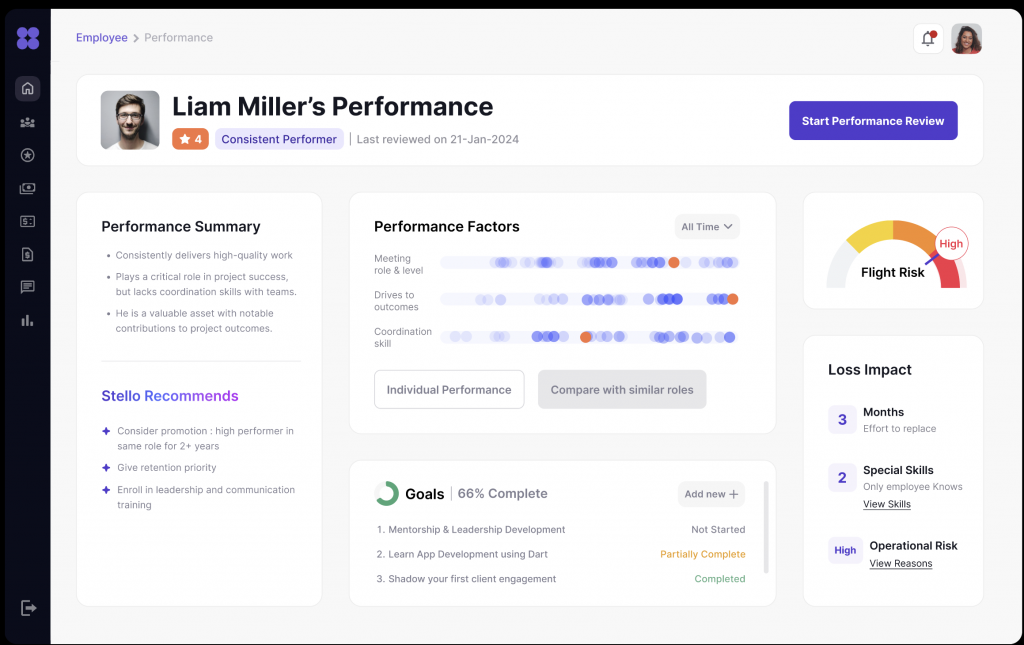
Stello AI is an AI-powered compensation planning and performance decision platform designed to centralize and automate how enterprises evaluate and reward talent. Unlike legacy performance tools that focus primarily on review cycles, Stello connects performance data with compensation planning, budget visibility, and analytics to help organizations make fair, data-driven pay decisions at scale.
As large enterprises grapple with complex compensation cycles, spreadsheets, and siloed systems, Stello aims to eliminate manual work and give leaders both strategic oversight and operational control. It supports salary, equity, bonus and incentive structures while offering transparency into spend and outcomes.
Best for: Enterprises that need performance-linked compensation decisions, real-time budget visibility, and governance at scale.
Key Features-
- Real-Time Compensation Budget Visibility: Track budget planning, compensation spend, and forecasts across teams and geographies without manual spreadsheets.
- Centralized Pay Elements Management: Configure and manage all compensation components — base salary, bonuses, equity (RSUs, options), incentives, and proration — within one system.
- AI-Guided Recommendations: AI-powered guidance to shape compensation philosophy, optimize pay decisions, and align outcomes with performance signals and market context.
- Integration with Enterprise Systems: Streamline data flows with HRIS, payroll, benefits systems, performance tools, equity assessment platforms, and more.
- Employee Compensation Statements & Transparency: Generate clear compensation statements so employees and leaders understand pay determinations, enhancing trust and retention.
Pros
- Decision-Focused Capability: Moves beyond static performance reviews to tie performance insights directly to compensation outcomes and budget planning — a key strategic priority for enterprise leadership.
- AI-Driven Insight & Fairness: Guided recommendations help remove bias from pay decisions and support defensible outcomes across divisions and regions.
- Enterprise-Scale Transparency: Real-time visibility and governance features offer executives and finance partners confidence in compensation cycles, reducing reliance on spreadsheets.
- Flexible Compensation Modeling: Supports varied compensation elements and structures, enabling nuanced, market-aligned packages.
Cons
- Limited Third-Party Reviews / Adoption Data: As a specialized platform, there are few publicly available user reviews or large benchmark datasets to gauge broader adoption patterns.
- Narrower Focus (Compensation-Heavy): The core strength is compensation linked to performance — enterprises seeking full performance lifecycle workflows (from goal setting through development) may need adjunct systems. (Contextual based on product positioning)
- Change Management Required: Shifting from legacy systems and spreadsheets to an intelligent decision engine demands executive sponsorship and alignment across HR, finance, and IT.
Lattice
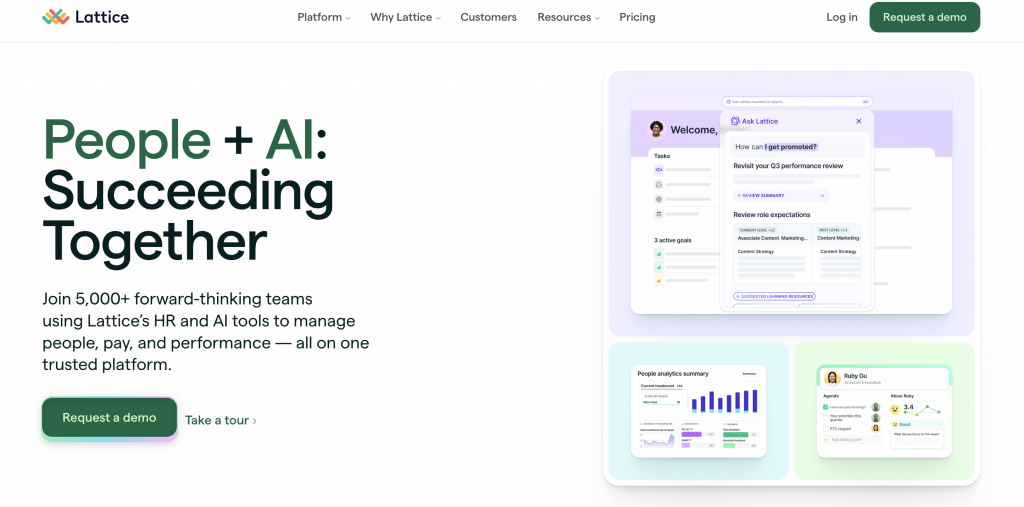
Lattice is a widely adopted performance and people management platform focused on continuous feedback, goal tracking, and manager effectiveness. It’s commonly used by mid-market and enterprise teams looking to formalize performance conversations and improve alignment.
Best for: Enterprises prioritizing continuous feedback and manager enablement.
Key Features
- Performance reviews and 360° feedback
- Goals and OKR tracking
- 1:1s, feedback, and praise
- Engagement surveys and people analytics
Pros
- Strong manager and employee adoption
- Clean, modern interface
- Flexible review and goal workflows
Cons
- Limited performance-to-compensation linkage
- Requires customization for enterprise governance
- Not designed as a decision-intelligence system
Betterworks
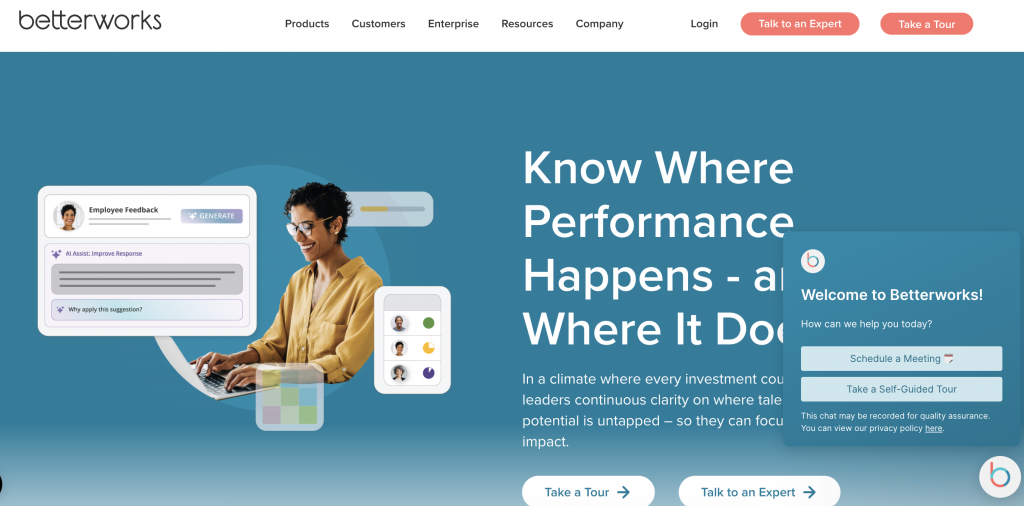
Betterworks is a continuous performance management platform that helps large organizations shift from annual reviews to ongoing performance, goals, feedback, and coaching. It’s built to align individual work with company objectives and support structured performance conversations at scale.
Best for: Enterprises focused on ongoing performance enablement and goal alignment.
Key Features
- Continuous feedback and structured check-ins
- Goal and OKR setting with progress tracking
- Performance reviews with 360° feedback
- People analytics and dashboards for trends and insights
- AI-assisted goal and feedback suggestions
Pros
- Strong support for continuous performance cycles rather than just annual reviews
- Aligns individual goals with company OKRs at scale
- Analytics and dashboards help HR spot trends and take action
- AI guidance enhances goal clarity and feedback quality
Cons
- Reporting and dashboards can feel less flexible or require manual work
- Learning curve and customization needs may slow initial adoption
- Less focused on compensation decision workflows compared with compensation-centric platforms
Culture Amp
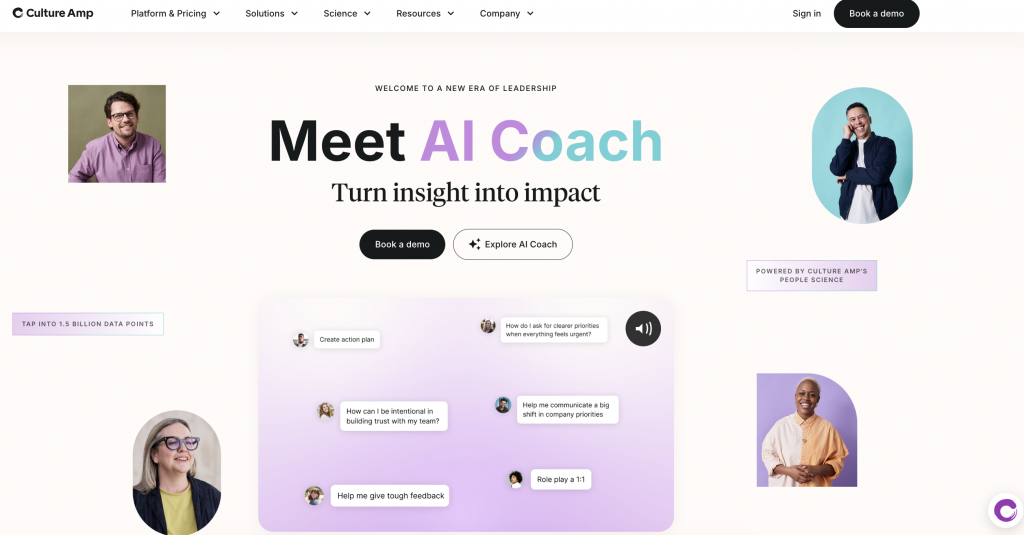
Culture Amp combines performance management with employee engagement and people analytics to help organizations understand both performance and the underlying drivers of employee experience. Its strong analytics and survey capabilities are grounded in research and designed to give leaders insight into performance trends, sentiment, and cultural drivers.
Best for: Enterprises seeking deep engagement insights paired with performance reviews.
Key Features
- Performance review workflows with self-reflection, peer and manager feedback
- Pulse and engagement surveys with benchmarking and analytics
- People analytics dashboards for trends and decision support
- Multilingual and enterprise support with integrations
Pros
- Strong engagement and feedback insights beyond basic performance data
- Research-backed survey templates and benchmarking tools
- Intuitive interface and clear analytics for managers and leaders
Cons
- Less depth in compensation decision workflows compared with dedicated platforms
- Advanced analytics and customization may require additional investment
- Setup and adoption can be complex for large, distributed teams
15Five
15Five is a performance management platform centered on continuous feedback, check-ins, goals, and manager effectiveness. It combines regular performance conversations with engagement insights and career planning tools — making performance a living part of the employee experience rather than a once-a-year event.
Best for: Organizations that want frequent performance touchpoints, structured feedback, and manager enablement.
Key Features
- Continuous feedback and weekly check-ins to drive regular performance dialogue
- Performance reviews with self, manager, and peer inputs
- Goals & OKR tracking tied to performance outcomes
- Engagement surveys and HR outcomes dashboards
- AI-assisted tools (e.g., Kona Meeting Assistant, automated insights)
Pros
- Encourages continuous, meaningful manager–employee dialogue rather than annual reviews
- Intuitive interface with engagement and goal tracking tightly integrated
- Built-in analytics connect performance, engagement, and retention insights
Cons
- Limited compensation decision workflows compared with specialized systems
- Advanced performance analytics and reporting can be less customizable
- Notifications and frequent alerts may feel overwhelming for some teams
Workday
Workday is a comprehensive cloud-based human capital management (HCM) platform that combines HR, talent management, payroll, workforce planning, and performance management into a unified system. It’s designed for large enterprises that want a single platform to manage both people operations and performance data across global organizations.
Best for: Enterprises that want unified HR + performance + workforce analytics in one large-scale system.
Key Features
- Performance review workflows and talent management tools, integrated with HR and analytics
- Continuous performance tracking and skills development insights
- AI-powered analytics and dashboards (e.g., Illuminate AI) for workforce insights
- Centralized HR, payroll, and workforce planning data for performance and people decisions
Pros
- Strong enterprise integration with HR, payroll, and workforce systems
- Scalable and secure for global, multi-entity deployments (enterprise-grade)
- AI-augmented analytics for talent insights and trends
- Rich reporting and dashboards with customizable visualization
Cons
- Performance management is not the core focus — it’s part of a broader HCM suite, so depth can lag dedicated tools
- Implementation and customization can be complex and time-intensive for large enterprises
- Some users report navigation complexity and slower performance for deep performance workflows
SAP SuccessFactors
SAP SuccessFactors is a comprehensive enterprise HCM suite with a strong performance and goals component built to scale across global organizations. It combines goal alignment, performance reviews, continuous feedback, and analytics — and is often chosen by enterprises that want performance management deeply integrated with HR, talent, and workforce planning.
Best for: Enterprises that want performance management integrated into a full HCM ecosystem with global compliance.
Key Features
- Goal alignment, performance reviews, and continuous feedback
- 360° review and coaching workflows
- Performance calibration and competency tracking
- Workforce analytics and reporting across HCM modules
- Integration with learning, succession, and HR processes
Pros
- Part of a unified enterprise HR platform — performance lives alongside core HR and talent workflows
- Strong goal management and alignment functions
- Analytics and reporting help support strategic decisions
- Global compliance, multi-country support, and integration depth
Cons
- Navigation and usability can be complex in deep enterprise deployments
- Customization often requires technical expertise or consultants
- Can be slow or overwhelming for first-time users due to breadth of capabilities
- Performance modules are tied into the broader HCM suite, which may dilute focus compared with dedicated tools
Reflektive
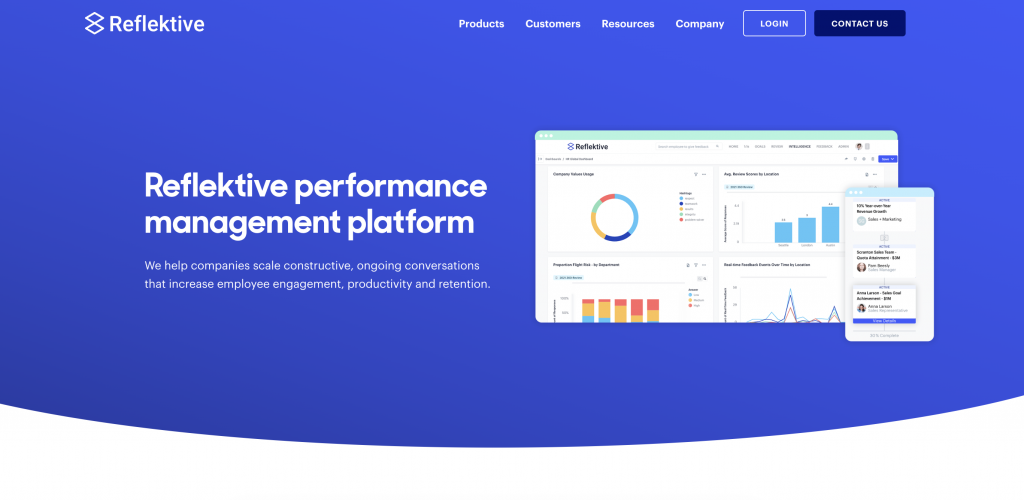
Reflektive is a performance management solution that helps organizations drive ongoing, real-time feedback, goals, and structured performance conversations — often where teams want feedback woven into daily workflows rather than traditional annual review cycles.
Best for: Teams seeking continuous feedback and straightforward performance check-ins.
Key Features
- Real-time feedback and goal tracking
- Performance reviews with 1:1s and check-ins
- Performance and engagement analytics dashboards
- Integrations with HRIS, Slack, Outlook, and chat tools
Pros
- User-friendly interface makes feedback and reviews accessible for busy teams
- Encourages frequent performance conversations and alignment
- Real-time feedback supports employee development and retention
Cons
- Admin and customization limitations reported in enterprise use cases
- Support and documentation quality issues cited by users
- Features can feel basic compared with broader performance suites
Leapsome
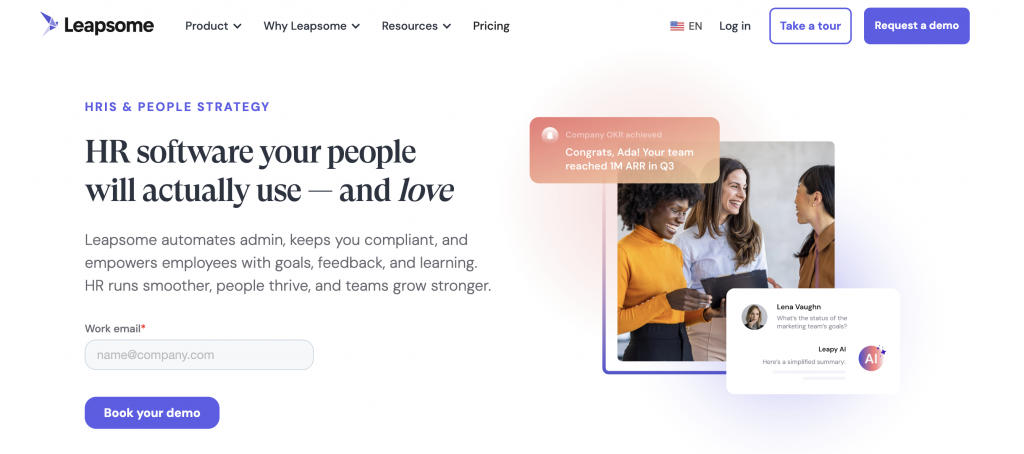
Leapsome is an all-in-one performance and people enablement platform that combines performance reviews, goals/OKRs, engagement surveys, and development tools into a coherent system — designed to foster continuous improvement and collaboration between managers and employees.
Best for: Organizations that want a holistic performance, goal, and engagement platform.
Key Features
- Customizable performance reviews and 360° feedback
- Goal and OKR alignment with tracking
- Engagement surveys with analytics
- Continuous feedback and performance dashboards
Pros
- Comprehensive feature set covering reviews, goals, and engagement
- Encourages feedback and alignment across teams
- Analytics and dashboards support insights and decision-making
Cons
- Broad feature scope can lead to a steeper learning curve for enterprise teams
- Customization and advanced use cases may require more configuration
- Compensation decision-specific workflows are less emphasized than in specialized tools
Cornerstone OnDemand
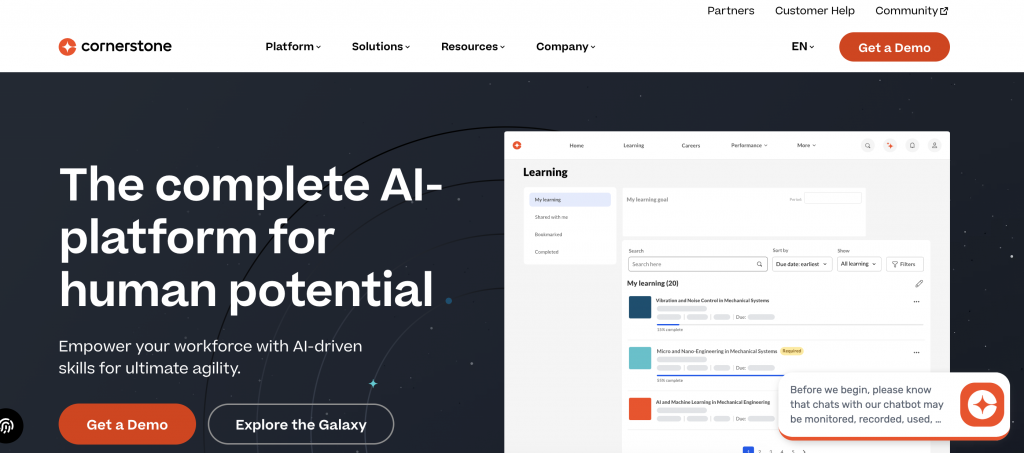
Cornerstone OnDemand offers enterprise-grade talent and performance management within a broader talent suite that includes learning, succession, and skills development. It’s widely deployed in large organizations seeking to integrate performance with talent growth and compliance workflows.
Best for: Large enterprises that want performance tied closely to learning, skills, and development at scale.
Key Features
- Performance reviews with configurable workflows
- Competency and skills assessments to support development
- AI-driven insights into performance and talent gaps
- Deep learning and succession planning integrations
- Enterprise security, multi-entity permissions, and compliance support
Pros
- Strong link between performance and talent development at enterprise scale
- Comprehensive talent suite includes learning and succession
- Built for complex org structures and governance
Cons
- Higher implementation effort and complexity
- User experience can feel heavy compared with lighter performance-specific tools
- Not as intuitive for continuous feedback workflows without configuration
Comparison Table: Performance Management Software for Large Enterprises
| Tool | Best Company Stage | Primary Focus | AI-Driven Intelligence | Performance–Comp Link | Executive Analytics | Global Readiness | Key Limitation |
| Stello | Scaling → Enterprise | Performance + compensation decision intelligence | Yes (core to product) | Native, end-to-end | Built for CXOs | Strong | Best suited for complex, mature orgs |
| Lattice | Mid-market → Enterprise | Continuous feedback & manager enablement | Partial | Limited | Moderate | Strong | Not designed for compensation decisions |
| Betterworks | Mid-market → Enterprise | OKRs & continuous performance | Partial | Limited | Moderate | Strong | Performance data not tied to pay outcomes |
| Culture Amp | Mid-market → Enterprise | Engagement + performance insights | Partial | Limited | Moderate | Strong | Performance is secondary to engagement |
| 15Five | Growth → Mid-market | Manager check-ins & feedback | Partial | Limited | Moderate | Moderate | Lacks enterprise-grade decision rigor |
| Workday | Enterprise | HCM-linked performance workflows | Minimal | Indirect | Strong | Strong | Rigid, slow to adapt |
| SAP SuccessFactors | Large global enterprise | Governance & compliance-led performance | No | Indirect | Strong | Strong | Poor usability, heavy configuration |
| Reflektive | Growth → Mid-market | Real-time feedback & reviews | No | None | Limited | Moderate | Shallow enterprise governance |
| Leapsome | Growth → Enterprise | All-in-one people enablement | Partial | Limited | Moderate | Moderate | Broad but not deep in decisions |
| Cornerstone OnDemand | Enterprise | Performance tied to learning & skills | Partial | Limited | Strong | Strong | Heavy platform, slower execution |
Conclusion
At enterprise scale, performance management is no longer about completing review cycles. It’s about making high-stakes decisions with confidence — who to reward, who to promote, where to invest, and where risk is building.
Most platforms covered here do parts of the job well. Some excel at feedback and engagement. Others integrate tightly with broader HCM suites. But very few are built for what senior leaders ultimately care about: clear, defensible performance decisions tied to real business outcomes.
That’s where Stello stands apart. By linking performance data directly to compensation and decision intelligence, Stello moves performance management out of operational execution and into the executive layer — where it belongs.
For large enterprises, the right choice isn’t the tool with the longest feature list. It’s the one that helps leadership make faster, fairer, and more consistent decisions at scale.
FAQs
What is performance management software for large enterprises?
Performance management software for large enterprises helps organizations evaluate performance at scale, align individual contributions with business goals, and support decisions around promotions, compensation, and talent development across complex structures.
How is enterprise performance management different from SMB tools?
Enterprise tools are built for scale and governance. They support multi-region teams, layered approvals, auditability, and executive-level visibility — capabilities most SMB tools are not designed to handle.
Why is linking performance to compensation important?
When performance data is disconnected from compensation, decisions become inconsistent and difficult to defend. Linking the two improves fairness, transparency, and trust—especially at enterprise scale.
How does Stello differ from traditional performance management tools?
Stello focuses on performance decisions, not just reviews. It connects performance insights directly to compensation, budgeting, and executive analytics, giving leaders confidence in outcomes.