Most companies spend far more on employee compensation than their people realize. Salary is visible. The 401(k) match, health premiums, equity grants, and paid leave that sit alongside it rarely are.
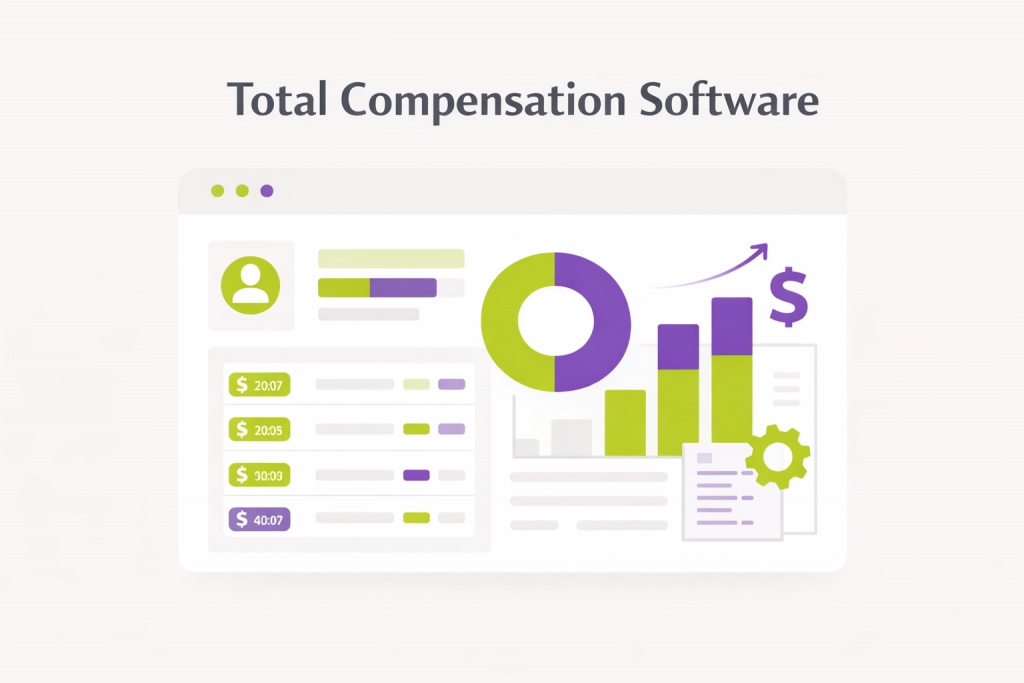
Total compensation software exists to fix that problem, and several others. It gives HR and compensation teams a single place to manage pay structures, model scenarios, benchmark against the market, and communicate the full value of what employees receive.
This guide covers what total compensation software is, the core features that matter, the business case for investing in it, and the tools worth evaluating in 2025.
TL;DR
- Total compensation software helps companies manage, model, and communicate the full value of employee compensation beyond just salary.
- Core features include compensation statements, benchmarking, salary band management, equity modeling, and pay equity reporting.
- It reduces comp cycle time, closes the employee perception gap, and supports pay equity compliance.
- Top platforms include Stello AI, Pave, and Carta — each suited to different company stages and needs.
- Choosing the right tool comes down to comp complexity, existing integrations, and implementation timeline.
What is Total Compensation Software?
Total compensation software is a category of HR technology that helps organizations manage, model, and communicate the complete value of employee compensation. It goes beyond base salary to account for every element of what an employee receives: bonuses, equity, health benefits, retirement contributions, paid time off, and perks.
The core problem it solves is visibility. Most employees see their paycheck. They rarely see the full picture. Total compensation software gives companies the tools to change that, while also helping comp and HR teams manage pay structures with more consistency, accuracy, and speed.
It is worth distinguishing total compensation software from adjacent tools that are often confused with it.
Payroll software processes payments. It calculates deductions, runs payroll cycles, and ensures employees are paid correctly and on time. It does not help you design pay structures, benchmark against the market, or communicate total package value to employees.
An HRIS, or human resources information system, manages employee data: headcount, job titles, performance records, onboarding workflows. Some HRIS platforms include basic compensation modules, but they are rarely built for the depth of analysis a dedicated comp tool provides.
Total compensation software sits in a different lane. It is purpose-built for compensation strategy: modeling salary bands, running equity scenarios, generating total compensation statements, and giving leadership the data they need to make informed pay decisions.
For companies managing compensation across multiple roles, levels, geographies, or pay structures, a spreadsheet or a basic HRIS module eventually breaks down. Total compensation software is what replaces it.
Who Needs Total Compensation Software?
Total compensation software is not a tool every company needs on day one. But there are clear signals that manual processes or basic HRIS modules are no longer enough.
Companies with growing headcount. Below 50 employees, compensation decisions are often manageable in a spreadsheet. As headcount crosses 200 and beyond, the complexity compounds. More roles, more levels, more geographies, and more pay variables mean more room for inconsistency and error. A dedicated tool brings structure that scales.
Organizations with complex pay structures. If your compensation program includes equity grants, variable pay, shift differentials, or multi-currency payroll, the interdependencies become difficult to manage manually. Total compensation software is built to handle that complexity without creating version-control nightmares or comp review bottlenecks.
HR and comp teams preparing for annual review cycles. Merit cycles, promotion rounds, and bonus distributions require pulling data from multiple sources, modeling scenarios, and getting approvals across the organization. Without dedicated software, these processes are slow, error-prone, and hard to audit. With it, the same cycle takes a fraction of the time.
Companies experiencing attrition tied to compensation dissatisfaction. If exit interview data or engagement surveys point to pay as a driver of turnover, the problem is often not just what you pay but what employees understand about what they receive. Total compensation software helps close that gap through clearer communication and better visibility into the full package.
Companies navigating pay equity requirements. As pay transparency laws expand across the US and globally, organizations need reliable data and audit trails to demonstrate equitable pay practices. Total compensation software makes that analysis faster and more defensible.
If more than one of these applies to your organization, the case for investing in a dedicated tool is strong.
Core Features to Look For
Not all total compensation software is built the same way. The right feature set depends on your organization’s size, complexity, and comp maturity. These are the capabilities that matter most.
Total compensation statements. This is the flagship feature of most platforms. A total compensation statement translates every element of an employee’s package into a single, readable document: base salary, bonus, equity value, employer benefit contributions, PTO value, and perks. When shared at the right moments, such as during offer acceptance, after a raise, or at annual review time, these statements have a measurable impact on employee perception and retention.
Compensation benchmarking and market data integration. A comp tool is only as useful as the data behind it. The best platforms integrate with third-party salary survey providers or maintain their own market data sets, allowing comp teams to benchmark roles against industry, geography, and company size in real time. This removes the lag and manual work of pulling external survey data into spreadsheets.
Salary band and pay range management. Building and maintaining salary bands is one of the most operationally complex parts of running a compensation program. Good software lets comp teams create, update, and enforce pay ranges across job families and levels, flag out-of-band employees, and model the cost of adjustments before committing to them.
Bonus and equity modeling. Variable compensation is where manual processes break down fastest. Total compensation software should allow teams to model bonus payouts under different performance scenarios, manage equity grant schedules and vesting timelines, and project the future value of equity awards for employees and leadership alike.
Reporting and analytics. Comp decisions require data. The best platforms offer dashboards and exportable reports covering pay equity analysis, compa-ratio distribution, budget utilization, and headcount cost modeling. These reports are essential for presenting comp strategy to finance and executive leadership.
Employee-facing self-service portal. Employees should be able to access their total compensation information on demand, not just when HR sends a PDF. A self-service portal gives employees visibility into their full package year-round and reduces the volume of comp-related questions hitting the HR team.
HRIS and payroll integrations. Total compensation software does not replace your HRIS or payroll system. It needs to connect to them. Look for native integrations with the platforms already in your stack, whether that is Workday, BambooHR, ADP, Rippling, or others. Clean data flow between systems is what keeps compensation records accurate without manual reconciliation.
Here is a feature checklist you can use during vendor evaluation:
| Feature | Must-have | Nice-to-have |
|---|---|---|
| Total compensation statements | Yes | |
| Market data / benchmarking | Yes | |
| Salary band management | Yes | |
| Bonus modeling | Yes | |
| Equity modeling | Yes | |
| Pay equity reporting | Yes | |
| Employee self-service portal | Yes | |
| HRIS integration | Yes | |
| Payroll integration | Yes | |
| Scenario planning / headcount modeling | Yes |
Benefits of Using Total Compensation Software
Investing in total compensation software delivers returns across three areas: operational efficiency, employee experience, and strategic decision-making. Here is how each plays out in practice.
Faster compensation review cycles. Merit cycles and bonus rounds are among the most time-intensive processes an HR team runs. Without dedicated software, comp teams spend weeks pulling data from disparate systems, building spreadsheet models, chasing approvals, and fixing errors introduced by manual entry. Total compensation software centralizes that workflow. Review cycles that previously took six to eight weeks can be completed in a fraction of the time, with fewer errors and a cleaner audit trail.
Improved pay equity visibility. Pay equity is both a legal requirement and a talent retention issue. Total compensation software makes it straightforward to identify pay disparities across gender, race, tenure, and job level before they become compliance problems or attrition drivers. Regular equity audits become a standing capability rather than a one-time project.
Closing the employee perception gap. Research consistently shows that employees underestimate the value of their total compensation by a significant margin. When an employee considers a competing offer, they are often comparing a known number against an unknown one. Total compensation software gives companies the tools to make that comparison visible, through statements, portals, and timely communication, reducing the risk of losing talent to offers that are not actually better on a total value basis.
Stronger compensation philosophy documentation. One of the less obvious benefits of dedicated comp software is that it forces organizational clarity. To configure salary bands, benchmarking parameters, and equity guidelines, comp teams have to articulate and document their compensation philosophy. That documentation becomes a durable asset: useful for manager training, candidate conversations, and board reporting.
Better headcount planning. When compensation data is centralized and modeled accurately, finance and HR can collaborate more effectively on headcount plans. Leadership can see the true cost of a new hire, a promotion, or a market adjustment before approving it, rather than discovering budget variances after the fact.
Reduced HR administrative burden. Employee-facing self-service portals significantly reduce the volume of compensation questions that reach the HR team. When employees can view their total package on demand, the number of one-off requests for pay information drops, freeing up HR capacity for higher-value work.
Top Total Compensation Software Tools
The market for total compensation software has grown significantly over the past few years. Here are three platforms worth evaluating, starting with the most comprehensive option for modern comp teams.
Stello AI
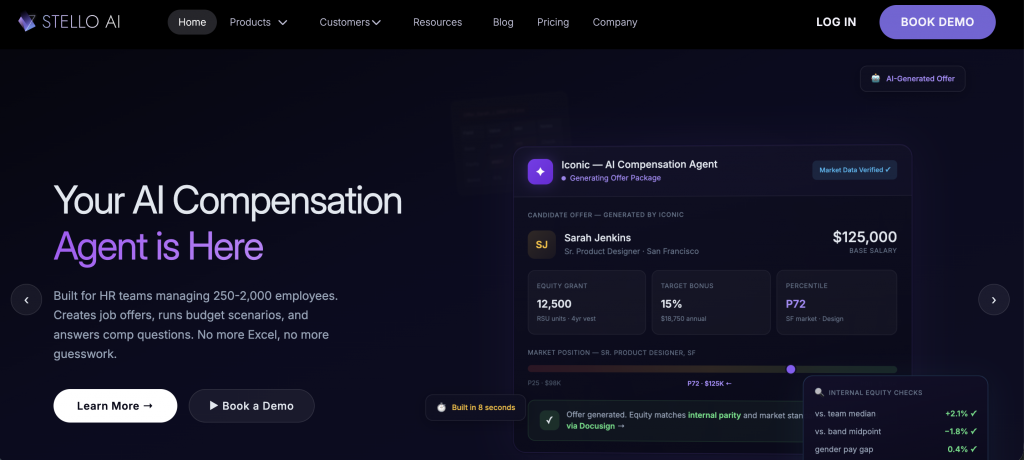
Stello AI is a compensation management platform built for HR and total rewards teams that need more than a static spreadsheet or a basic HRIS module. It combines compensation benchmarking, salary band management, and total compensation statement generation in a single platform, with AI-powered features that reduce the manual work traditionally associated with comp cycle management.
Where Stello AI stands out is in its ability to surface compensation insights at the right moment. Rather than running equity analyses as a periodic project, the platform makes pay equity visibility a standing capability. Comp teams can model adjustments, flag outliers, and generate employee-facing statements without switching between tools.
Best for: mid-market and enterprise companies looking to modernize their total rewards program and reduce comp cycle time.
Pave
Pave is a compensation benchmarking and planning platform that built its reputation on real-time market data. Unlike traditional salary surveys that publish data annually, Pave aggregates compensation data continuously from its customer base, giving comp teams a more current view of what the market is paying for a given role, level, and geography.
Pave also includes salary band management and total compensation statement features, making it a reasonable end-to-end option for companies that prioritize benchmarking accuracy above all else.
Best for: fast-growing technology companies that need current market data and are building out their comp infrastructure for the first time.
Carta
Carta started as an equity management platform and has expanded into broader total compensation territory. Its core strength remains equity: cap table management, equity plan administration, 409A valuations, and employee-facing equity dashboards that help employees understand the current and projected value of their grants.
For companies where equity is a significant component of total compensation, particularly startups and growth-stage technology companies, Carta provides depth that generalist comp platforms cannot match. Its total compensation features are strongest when equity is the centerpiece of the package.
Best for: startups and venture-backed companies managing complex equity structures alongside cash compensation.
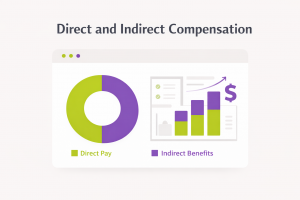
Also read: What is Direct and Indirect Compensation? A Complete Guide
How to Choose the Right Total Compensation Software
With several capable platforms on the market, the decision comes down to fit rather than features. A tool that works well for a 50-person startup will not necessarily serve a 2,000-person enterprise, and vice versa. Here is a framework for narrowing the field.
Start with company size and comp complexity. Headcount is a useful starting point, but the more important variable is compensation complexity. A 300-person company with a straightforward cash-only structure has different needs than a 150-person startup managing equity grants across multiple geographies. Map your actual pay components before evaluating platforms.
Define your must-have features. Use the feature checklist from the earlier section to separate non-negotiables from nice-to-haves. If benchmarking accuracy is your primary pain point, weight that heavily. If total compensation statements and employee communication are the core use case, prioritize platforms with strong employee-facing portals. Trying to optimize for everything usually leads to overpaying for features you will not use.
Audit your existing stack. Total compensation software needs to connect cleanly with your HRIS and payroll systems. Before shortlisting vendors, confirm which native integrations each platform supports. A tool that requires custom API work to connect with your existing systems will cost more and take longer to implement than the vendor’s sales materials suggest.
Get clarity on implementation timeline. Compensation software implementations vary widely. Some platforms are configured and live within a few weeks. Others require months of data migration, band-building, and stakeholder alignment before they are useful. If you are building toward a specific comp cycle or review deadline, implementation timeline is a hard constraint, not a secondary consideration.
Evaluate total cost of ownership. Most platforms price on a per-employee per-month basis, but the headline number rarely tells the full story. Factor in implementation fees, data integration costs, ongoing support tiers, and the internal time required to administer the platform. A cheaper tool that requires significant manual maintenance may cost more in practice than a higher-priced platform that runs with less overhead.
Run a structured pilot if possible. Before committing, ask shortlisted vendors for a scoped pilot using your actual data. Seeing how a platform handles your specific job architecture, pay ranges, and equity structure is far more informative than a demo built on generic sample data.
Conclusion
Total compensation software is not just an operational upgrade for HR teams. It is a strategic investment in how an organization understands, manages, and communicates the value it delivers to employees.
The companies that get compensation right do not just pay competitively. They make sure employees know it. They build pay structures that scale with the business, run review cycles without the chaos of disconnected spreadsheets, and catch equity issues before they become retention or compliance problems.
The right platform depends on where your organization is today and where it is heading. A startup managing equity-heavy packages has different priorities than an enterprise running global merit cycles. But the underlying need is the same: a single source of truth for compensation that gives HR, finance, and employees the visibility they each need.
If your current process relies on spreadsheets, manual exports, or a basic HRIS module that was never built for comp strategy, the gap between what you spend on people and what your people perceive is likely larger than you think. Total compensation software is how you close it.
FAQs-
FAQs
What is the difference between total compensation software and payroll software?
Payroll software processes payments. It calculates deductions, manages tax withholding, and ensures employees are paid accurately and on time. Total compensation software is built for compensation strategy: modeling pay structures, benchmarking against the market, generating total compensation statements, and giving employees visibility into the full value of their package. The two tools serve different purposes and most organizations run both.
Does total compensation software integrate with HRIS platforms?
Yes, most total compensation platforms offer native integrations with major HRIS systems including Workday, BambooHR, Rippling, and ADP. Clean integration between your HRIS and comp software is important because it eliminates manual data entry and keeps employee records accurate across systems. Always confirm which specific integrations a vendor supports before committing, as the depth of those integrations varies considerably from platform to platform.
How much does total compensation software cost?
Most platforms price on a per-employee per-month basis, typically ranging from $10 to $30 per employee per month depending on the feature tier and company size. Enterprise pricing is usually custom and negotiated based on headcount, integration requirements, and contract length. Implementation fees are common and vary by platform. Factor in the full cost of ownership, including setup, support, and internal administration time, when comparing options.
Is total compensation software only for large companies?
No. While enterprise companies with complex pay structures get the most immediate operational value, mid-market companies with 150 or more employees benefit significantly from dedicated comp software, particularly during periods of rapid hiring or when preparing for pay transparency compliance. Some platforms are specifically designed for earlier-stage companies building their compensation infrastructure for the first time.