Enterprise Compensation Management: A Guide for Modern Teams
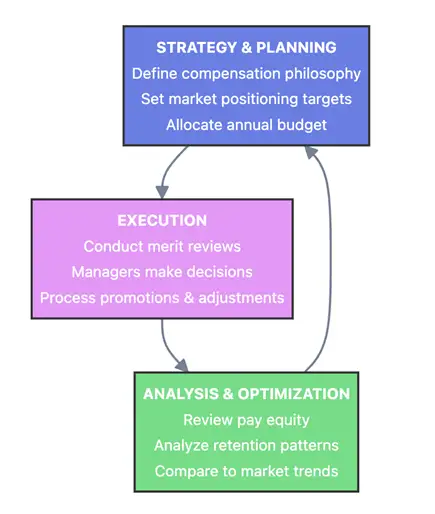
Enterprise Compensation Management refers to the strategic processes, systems, and technologies organizations use to plan, administer, and optimize employee compensation at scale. Unlike traditional payroll systems that simply process payments, Enterprise Compensation Management encompasses the entire compensation lifecycle. Key components are
Market benchmarking
Budget allocation
Merit planning
Pay equity analysis
Total rewards communication.
For enterprises managing hundreds or thousands of employees across multiple locations, departments, and job families, compensation management becomes exponentially more complex. ECM platforms help organizations maintain consistency, ensure compliance, promote pay equity, and align compensation strategies with business objectives. According to Gallup, 31% of employees are dissatisfied with their current pay, highlighting the critical need for strategic compensation management.
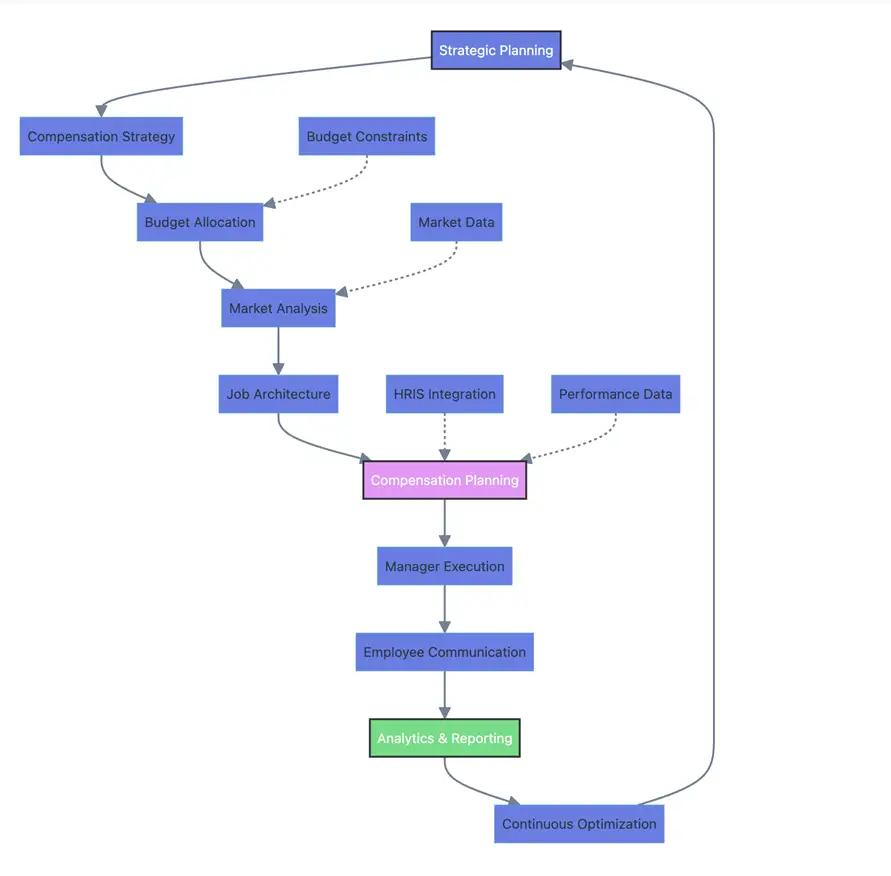
Enterprise Compensation Management Ecosystem
The Core Components of Enterprise Compensation Management
1. Compensation Philosophy & Strategy
Every successful ECM program begins with a clearly defined compensation philosophy that articulates how the organization positions itself in the market, what it values in employee contributions, and how compensation supports business goals. This philosophy guides all subsequent decisions about pay positioning, pay mix (base vs. variable), geographic differentials, and internal equity considerations.
Example Compensation Philosophy Statement
“We target the 50th percentile of the market for base salary and the 75th percentile for equity compensation. We retain employees by paying very competitively on equity refreshes. Equity compensation ensures strong ownership and a way for high performing employees to gain financial wealth.
2. Market Benchmarking & Job Pricing
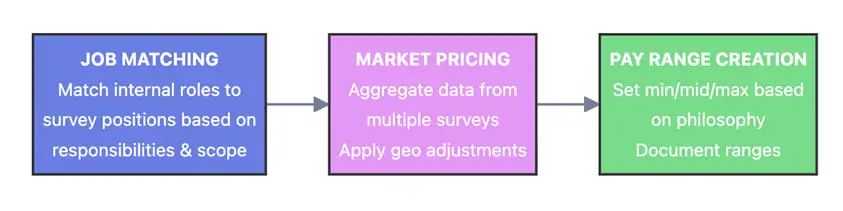
Accurate market data is the foundation of competitive compensation. Enterprises typically subscribe to multiple compensation surveys (Radford, Mercer, Willis Towers Watson, etc.) and use sophisticated matching algorithms to align internal roles with market data. Modern Enterprise Compensation Management platforms like Stello AI use Artificial Intelligence to suggest market matches, explain matching rationale, and aggregate data across multiple sources to provide comprehensive market views.
Top-Down Planning: Executive leadership sets overall compensation budget (typically 3-5% of payroll), HR allocates to divisions, and managers distribute within their teams. This approach ensures fiscal discipline but can limit manager flexibility.
Bottom-Up Planning: Managers submit compensation recommendations based on performance and market positioning, which are then aggregated and calibrated. This approach increases manager ownership but requires more sophisticated guardrails and calibration.
4. Pay Equity
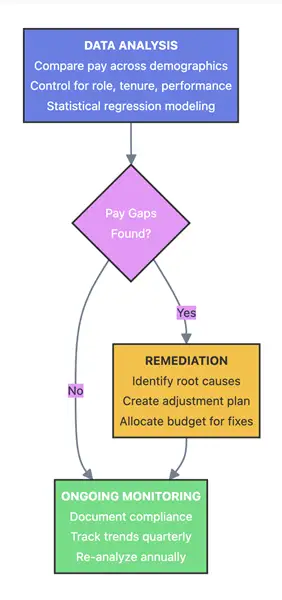
Pay equity has moved from a nice-to-have to a legal imperative in many jurisdictions. Enterprise compensation management must include robust analytics to identify unexplained pay gaps, proactive adjustments to remediate disparities, and transparent reporting to demonstrate compliance with regulations like California’s SB 1162, Colorado’s Equal Pay for Equal Work Act, and similar laws in EU member states.
Competitive Pay Analysis Framework Diagram
5. Total Rewards Communication
Employees often undervalue their total compensation because they only see base salary on their paycheck. Enterprise Compensation Management includes personalized total rewards statements that quantify employer contributions to benefits (health insurance, retirement matching, equity value), professional development investments, and other perks.
With Stello AI, your team can model different budget scenarios to stay within budget while maintaining pay equity and rewarding top performers.
AI Market Pricing
Accelerate your salary benchmarking process. Use Stello AI to accelerate your job matching and market pricing processes.
Compensation Planning
Manage an entire compensation cycle with integrated data to support compensation change decisions.
Total Rewards Portal
Send informative employee statements that incorporate total rewards. Allow employees to access their total rewards history at any time through a single portal.
Ad Hoc Increases
Initiate pay changes throughout the year, whether via base salary increases or spot bonuses.
AI Compensation Agent
Iconic is your company’s newest compensation partner, able to answer questions about your compensation data and handle complex calculations in seconds.