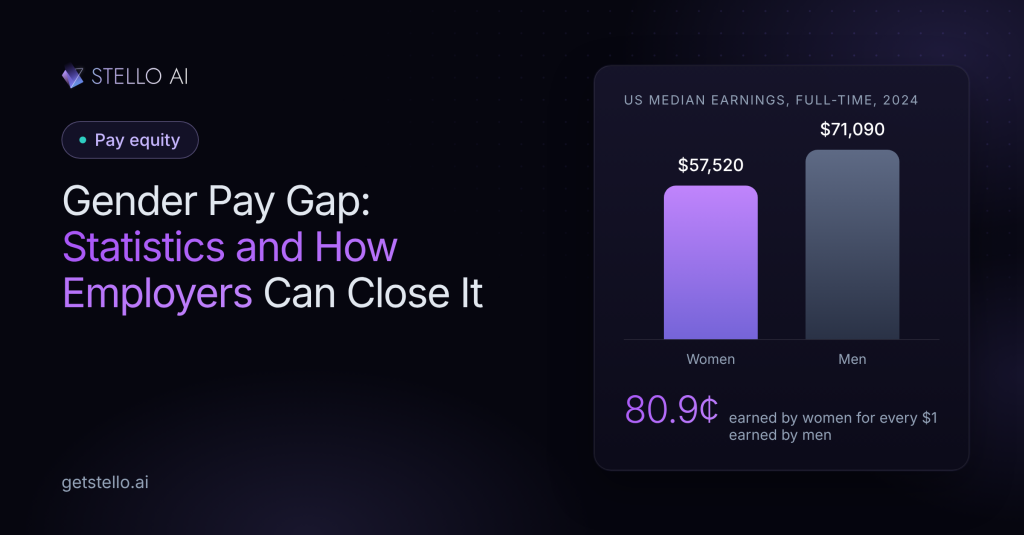
The gender pay gap is the difference between what women and men earn. In the US, women working full time, year round earned 80.9 cents for every dollar men earned in 2024, according to Census Bureau data analyzed by the Institute for Women’s Policy Research. That’s a gap of 19.1%, wider than the year before, when women earned 82.7 cents.
For employers, the gap is more than a national statistic. It shows up in their own pay data, and pay transparency laws in the US and EU now make it harder to ignore.
Gender Pay Gap Statistics
| Measure (2024) | Women | Men | Ratio |
|---|---|---|---|
| Median earnings, full-time year-round workers | $57,520 | $71,090 | 80.9 cents per dollar |
| Median earnings, all workers | $45,380 | $60,020 | 75.6 cents per dollar |
The gap is wider for women of color. Compared with white men’s earnings, Black women earned 64.6% and Latina women earned 58.0% in 2024, working full time, year round.
Adjusted vs Unadjusted Gender Pay Gap
There are two ways to measure the gender pay gap, and they answer different questions.
| Unadjusted (raw) pay gap | Adjusted pay gap | |
|---|---|---|
| What it compares | Median pay of all women vs all men | Pay of women and men in similar roles with similar factors |
| Controls for | Nothing | Job, level, location, experience, performance |
| What it shows | How pay and roles are distributed across a company | Whether people doing similar work are paid differently |
| Why it matters | Reveals gaps in representation, such as fewer women in senior roles | Reveals possible unequal pay for similar work |
A company can have a small adjusted gap and still a large unadjusted gap if women are concentrated in lower-paid roles. Both numbers matter.
What Causes the Gender Pay Gap?
- Occupational differences: women are overrepresented in lower-paid fields and roles.
- Fewer women in senior roles: fewer promotions into leadership widen the gap at the top.
- Starting pay: offers based on past pay or negotiation can carry gaps forward.
- Unequal raises and bonuses: small differences each cycle add up over time.
- Caregiving: career breaks and part-time work affect lifetime earnings.
How Employers Can Close the Gender Pay Gap
1. Run a pay equity audit
A pay equity audit compares pay for employees doing similar work, controlling for factors like level, location and performance. It shows where unexplained gaps exist. Read our guide to running a pay equity analysis.
2. Fix gaps before decisions go out
Check every raise, bonus and offer for its effect on pay equity before it’s approved, not after.
3. Set offers from the market, not salary history
Base starting pay on the role and market data instead of past pay, which can carry old gaps into new jobs.
4. Use clear salary ranges
Transparent ranges and job levels make it easier to spot and explain pay differences.
5. Track the gap every year
Measure both the adjusted and unadjusted gap, by department and level, and report progress to leadership.
Stello AI checks raises and offers against team medians, band midpoints and the gender pay gap before they’re approved. Iconic, Stello’s AI compensation agent, can also run a pay equity analysis by gender, level, location and department whenever you ask.
Frequently Asked Questions
What is the gender pay gap in the US?
In 2024, women working full time, year round earned 80.9 cents for every dollar men earned, a gap of 19.1%, based on Census Bureau data analyzed by IWPR.
What is the difference between the adjusted and unadjusted gender pay gap?
The unadjusted gap compares median pay for all women and all men. The adjusted gap compares women and men in similar roles, controlling for factors such as level, location and experience.
What is a pay equity audit?
A pay equity audit is an analysis of a company’s pay data that checks whether employees doing similar work are paid fairly, regardless of gender, race or other characteristics.
How can companies reduce the gender pay gap?
Companies can run regular pay equity audits, check raises and offers for equity before approval, stop using salary history, use clear salary ranges and track progress every year.
Is the gender pay gap getting smaller?
Not recently. The full-time, year-round gap widened from 82.7 cents in 2023 to 80.9 cents per dollar in 2024.